
Eye Bag Surgery vs Non-Surgical Under-Eye Treatment: What Is the Difference?
Tired eyes are one of the most common reasons overseas patients write to us. Many messages ask the same comparison: eye bag surgery versus non-surgical under-eye treatment. The honest starting point is that “tired under-eyes” can come from different anatomy — protruding bags, hollow tear troughs, fine skin changes, or a mix. The right path depends on which of those is driving the look.
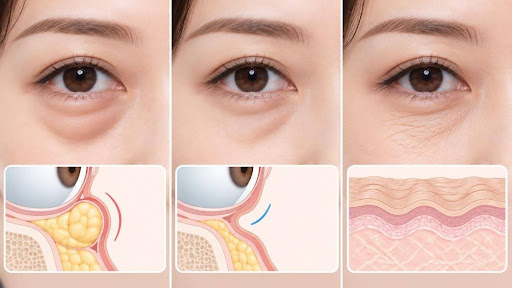 If the lower lid looks puffy because fat pads are pushing forward, that is a bag problem. If the area looks sunken or shadowed where volume has dropped, that is often a hollow or tear-trough problem. If the skin looks crepey or finely lined without a true bulge, the concern is more about skin quality. Eye bag removal surgery is designed for the first problem. Volume-focused care can help the second. Skin-quality concerns need a different conversation entirely.
This distinction matters because choosing “non-surgical” first does not automatically fix a structural bag — and choosing surgery without checking hollowness can leave a shadowed groove even after puffiness improves.
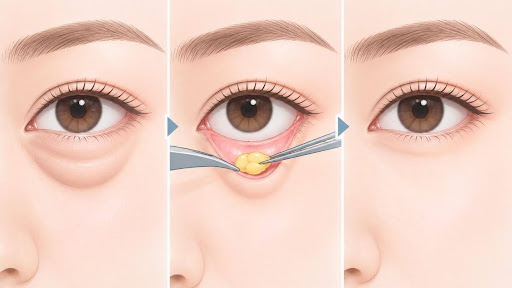 Your visit begins with consultation and custom design. We evaluate your facial anatomy, align the plan with your goals, and mark the clinical approach. After anaesthesia and treatment, you rest while the area is gently cooled. Before you leave, we provide post-operative oral medications and instructions.
Because the approach is from inside the eyelid, the surface skin is not opened for the fat-pad work we describe. Many of our patients are able to resume light activities such as gentle sightseeing as early as the next day — if they feel well and we agree. Typical recovery notes: peak swelling often lasts three to four days; mild swelling and internal bruising generally settle within one to two weeks.
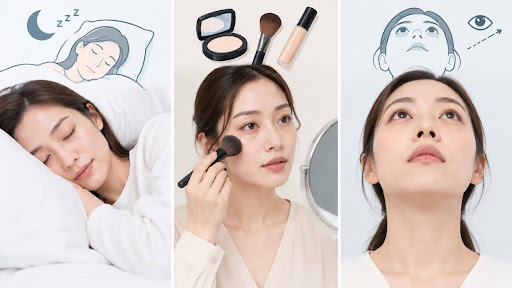 Consider a surgical conversation with us when:
– The lower lid has a clear bulge that does not flatten with rest or better sleep – Makeup and lighting tricks cannot hide the puffiness
– Eyes from below or at an angle still show a bag
– You want a structural change rather than a temporary surface camouflage
In those cases, eye bag removal through our transconjunctival approach is designed for the anatomy itself.
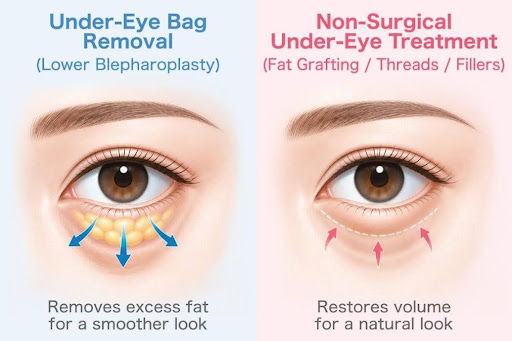 A non-surgical discussion can still be useful when the tired look is driven more by hollowness, mild soft-tissue descent elsewhere on the face, or early volume loss — and less by a true fat-pad bulge. For facial volume, we offer facial fat grafting (micro-fat transfer) using your own fat. For sagging that may suit threads, we offer a thread lift. Sometimes under-eye rejuvenation planning includes more than one facial concern; our physicians will say whether bags, volume, or lift should lead.
Quick answer: bags, hollows, and tired eyes are not the same problem
If the lower lid looks puffy because fat pads are pushing forward, that is a bag problem. If the area looks sunken or shadowed where volume has dropped, that is often a hollow or tear-trough problem. If the skin looks crepey or finely lined without a true bulge, the concern is more about skin quality. Eye bag removal surgery is designed for the first problem. Volume-focused care can help the second. Skin-quality concerns need a different conversation entirely.
This distinction matters because choosing “non-surgical” first does not automatically fix a structural bag — and choosing surgery without checking hollowness can leave a shadowed groove even after puffiness improves.
What eye bag surgery addresses
Eye bag surgery (lower blepharoplasty for bags) is aimed at the protruding fat that creates a bulging, heavy lower lid. At Garden Clinic, our under-eye bag removal is surgical. We approach the fat pads from inside the lower eyelid — a transconjunctival approach — so we do not leave a scar on the surface of the skin. When hollow tear troughs sit beside the bags, we may also transfer a small amount of your own fat to smooth the lid–cheek transition. That combination is important for under-eye rejuvenation: removing the bulge and, when needed, softening the hollow so the area looks refreshed rather than simply “emptied.”How we perform under-eye bag removal at Garden Clinic
Your visit begins with consultation and custom design. We evaluate your facial anatomy, align the plan with your goals, and mark the clinical approach. After anaesthesia and treatment, you rest while the area is gently cooled. Before you leave, we provide post-operative oral medications and instructions.
Because the approach is from inside the eyelid, the surface skin is not opened for the fat-pad work we describe. Many of our patients are able to resume light activities such as gentle sightseeing as early as the next day — if they feel well and we agree. Typical recovery notes: peak swelling often lasts three to four days; mild swelling and internal bruising generally settle within one to two weeks.
What people usually mean by non-surgical under-eye treatment
Online, “non-surgical under-eye treatment” can mean several different things: temporary volume products, energy-based skin devices, topical routines, or other clinic menus we do not offer as our under-eye bag solution. We do not present fillers or device packages as our eye bag removal method at Garden Clinic. We do offer other non-surgical facial care in our anti-aging menu — notably our thread lift for sagging soft tissue — but that is not the same as treating a protruding lower-lid fat pad. If your main issue is a true bag, comparing a general non-surgical skin treatment to eye bag surgery is often comparing two different jobs.When surgery is usually the clearer path
Consider a surgical conversation with us when:
– The lower lid has a clear bulge that does not flatten with rest or better sleep – Makeup and lighting tricks cannot hide the puffiness
– Eyes from below or at an angle still show a bag
– You want a structural change rather than a temporary surface camouflage
In those cases, eye bag removal through our transconjunctival approach is designed for the anatomy itself.
When a non-surgical conversation may still matter
A non-surgical discussion can still be useful when the tired look is driven more by hollowness, mild soft-tissue descent elsewhere on the face, or early volume loss — and less by a true fat-pad bulge. For facial volume, we offer facial fat grafting (micro-fat transfer) using your own fat. For sagging that may suit threads, we offer a thread lift. Sometimes under-eye rejuvenation planning includes more than one facial concern; our physicians will say whether bags, volume, or lift should lead.