
Non-Surgical Face Lift in Japan: What Patients Should Know
A non-surgical face lift is often considered by patients who want to improve mild to moderate facial sagging without undergoing traditional facelift surgery.
At Garden Clinic, a non-surgical face lift refers primarily to a thread lift using specialised cog threads. The treatment is designed to support and reposition selected areas of facial tissue while maintaining a natural appearance.
It is important to understand that a thread lift is not the same as a surgical facelift. The two treatments differ in technique, recovery, longevity, and the degree of correction they may provide.
A non-surgical face lift is a minimally invasive treatment intended to support facial tissue without removing excess skin through surgery.
At Garden Clinic, the treatment is performed using specialised cog threads. These threads are placed beneath the skin to anchor and support areas affected by sagging.
Treatment planning considers:
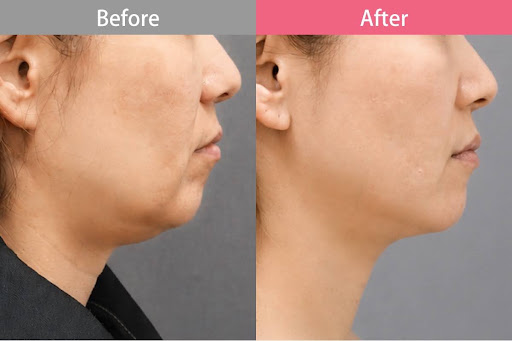 During a thread lift, specialised threads are inserted beneath the skin through small entry points.
The threads contain tiny cogs or structures that help engage the surrounding tissue. Once positioned, they provide support and allow the physician to gently reposition selected areas.
Thread lifts may also encourage collagen production around the treated area as the tissue heals. However, the response and duration of results vary between individuals.
The number, direction, and placement of threads are determined according to the patient’s anatomy and treatment goals.
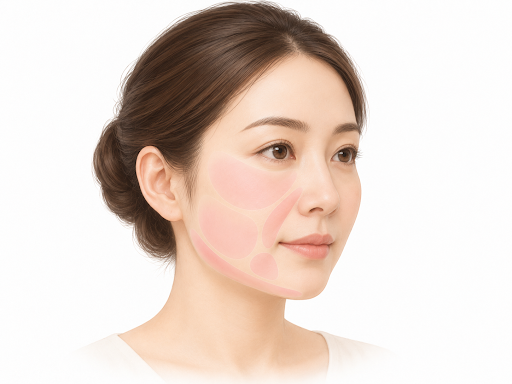 A thread lift may be considered for areas such as the:
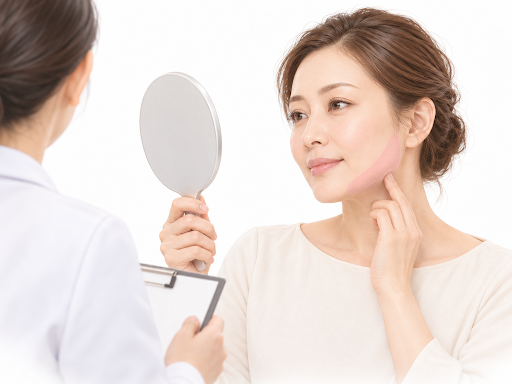 A thread lift may be considered for patients who:
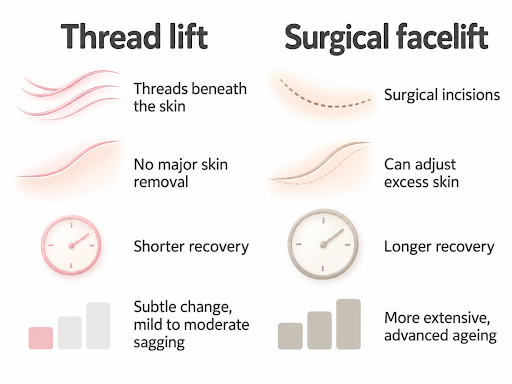 A thread lift and a surgical facelift should not be viewed as interchangeable procedures.
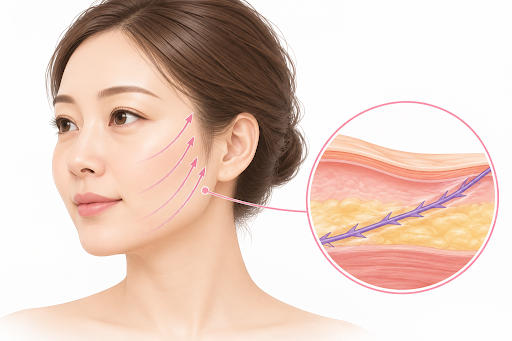 A thread lift:
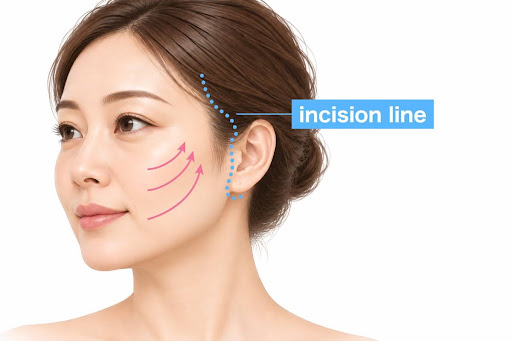 A surgical facelift:
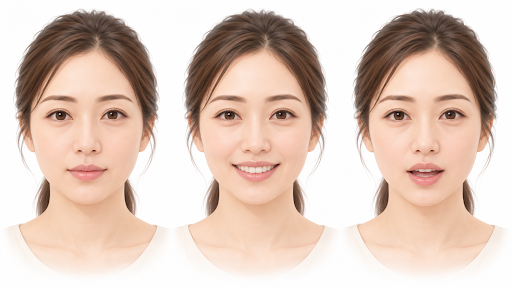 A successful thread lift should be planned around the natural structure of the face.
The objective is not to pull every area upward as tightly as possible. Overcorrection may create an unnatural appearance or interfere with normal facial movement.
Treatment planning considers how the face looks:
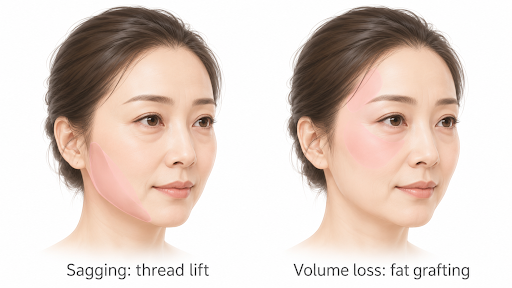 A thread lift supports sagging tissue, but it does not replace facial volume in the same way as fat grafting.
Some patients have both sagging and volume loss. In these cases, lifting the tissue alone may not fully address hollow temples, flattened cheeks, or other areas affected by reduced volume.
Depending on the assessment, a physician may discuss combining a thread lift with facial fat grafting.
Facial fat grafting uses fat collected from another area of the body and places it into selected facial areas to restore volume.
Combination treatment may be considered when:
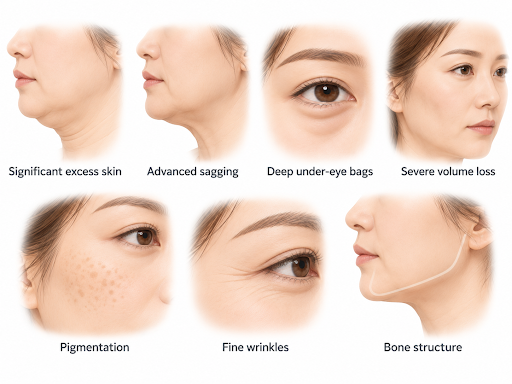 A thread lift is not intended to correct every sign of facial ageing.
It may not adequately address:
 A thread lift should not be scheduled too close to an important event.
Tell Garden Clinic if you have upcoming:
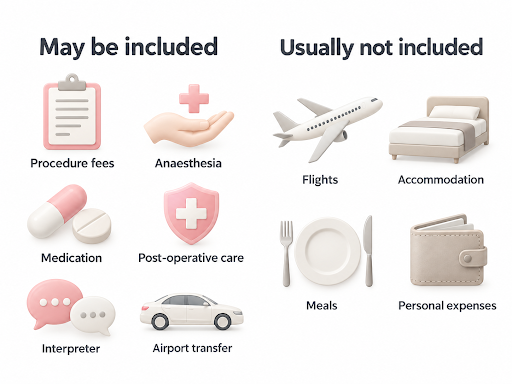 Garden Clinic generally provides estimated quotations using an all-inclusive pricing structure.
Depending on your individual treatment plan, the quotation may include:
What Is a Non-Surgical Face Lift?
A non-surgical face lift is a minimally invasive treatment intended to support facial tissue without removing excess skin through surgery.
At Garden Clinic, the treatment is performed using specialised cog threads. These threads are placed beneath the skin to anchor and support areas affected by sagging.
Treatment planning considers:
- The areas of facial sagging
- Skin and tissue quality
- Facial structure
- The direction in which the tissue should be supported
- The depth and position of the threads
- The patient’s preferred degree of change
How Does a Thread Lift Work?
During a thread lift, specialised threads are inserted beneath the skin through small entry points.
The threads contain tiny cogs or structures that help engage the surrounding tissue. Once positioned, they provide support and allow the physician to gently reposition selected areas.
Thread lifts may also encourage collagen production around the treated area as the tissue heals. However, the response and duration of results vary between individuals.
The number, direction, and placement of threads are determined according to the patient’s anatomy and treatment goals.
Which Areas May Be Treated?
A thread lift may be considered for areas such as the:
- Lower cheeks
- Jawline
- Jowls
- Mid-face
- Nasolabial area
- Lower facial contour
Who May Be Suitable for a Thread Lift?
A thread lift may be considered for patients who:
- Have mild to moderate facial sagging
- Want a more defined jawline or lower facial contour
- Prefer a less invasive option than facelift surgery
- Understand that the result may be subtler than surgery
- Have realistic expectations about recovery and longevity
- Are medically suitable for the procedure
Thread Lift Versus Surgical Facelift
A thread lift and a surgical facelift should not be viewed as interchangeable procedures.
Thread Lift
A thread lift:
- Uses specialised threads placed beneath the skin
- Does not involve removing large amounts of excess skin
- Usually requires a shorter recovery period
- May be suitable for mild to moderate sagging
- Generally produces a more subtle degree of change
- Has results that are not permanent
Surgical Facelift
A surgical facelift:
- Involves surgical incisions
- May reposition deeper tissues
- Can remove or adjust excess skin
- Usually requires a longer recovery period
- May provide more extensive correction
- May be considered for more advanced facial ageing
Natural-Looking Facial Support
A successful thread lift should be planned around the natural structure of the face.
The objective is not to pull every area upward as tightly as possible. Overcorrection may create an unnatural appearance or interfere with normal facial movement.
Treatment planning considers how the face looks:
- At rest
- While smiling
- While speaking
- From the front
- From both side angles
Thread Lift and Facial Expressions
Immediately after treatment, temporary tightness may affect the way the face feels when smiling, speaking, chewing, or opening the mouth. This does not necessarily reflect the longer-term result. Your physician will assess thread placement carefully to support the tissue without unnecessarily restricting normal expression. During consultation, explain whether you:- Speak publicly for work
- Record videos regularly
- Perform on stage
- Sing professionally
- Have an important event approaching
- Are particularly concerned about changes to your smile
Can a Thread Lift Restore Lost Volume?
A thread lift supports sagging tissue, but it does not replace facial volume in the same way as fat grafting.
Some patients have both sagging and volume loss. In these cases, lifting the tissue alone may not fully address hollow temples, flattened cheeks, or other areas affected by reduced volume.
Depending on the assessment, a physician may discuss combining a thread lift with facial fat grafting.
Facial fat grafting uses fat collected from another area of the body and places it into selected facial areas to restore volume.
Combination treatment may be considered when:
- The cheeks have lost volume
- The temples appear hollow
- Sagging and facial flattening occur together
- Supporting the tissue alone may not create sufficient balance
What a Thread Lift Cannot Treat
A thread lift is not intended to correct every sign of facial ageing.
It may not adequately address:
- Significant excess skin
- Advanced facial sagging
- Deep under-eye bags
- Severe facial volume loss
- Skin pigmentation
- Fine surface wrinkles
- Concerns requiring bone or structural surgery
What to Expect During Recovery
Recovery varies between individuals and depends on the number of threads used, the treatment areas, and the patient’s healing response. Temporary effects may include:- Swelling
- Bruising
- Tenderness
- Tightness
- Mild pain
- A pulling sensation
- Temporary unevenness caused by swelling
- Difficulty opening the mouth widely
- Discomfort when chewing
Eating After a Thread Lift
Some patients may find it temporarily uncomfortable to open their mouth widely or chew firm foods. During the early recovery period, softer foods may be more comfortable. Examples may include:- Soup
- Porridge
- Soft rice
- Noodles
- Eggs
- Yoghurt
- Tofu
- Soft fish
- Steamed vegetables
Activities to Avoid During Early Recovery
Your medical team may advise you to temporarily avoid:- Intense exercise
- Saunas and steam rooms
- Facial massage
- Strong pressure on the treated areas
- Sleeping with the face pressed against a pillow
- Excessive mouth opening
- Hard or chewy foods
- Dental treatment soon after the procedure
- Heavy makeup over healing entry points
Planning Around Work and Social Events
A thread lift should not be scheduled too close to an important event.
Tell Garden Clinic if you have upcoming:
- Weddings
- Family photographs
- Business presentations
- Public appearances
- Video recordings
- Long-haul flights
- Important meetings
- Dental appointments
Planning Treatment When Travelling to Japan
International patients may contact Garden Clinic through WhatsApp or the online enquiry form. Support is available in English and Chinese. To begin, send clear, unfiltered photographs of your face. Useful photographs include:- A front-facing view
- A left angled view
- A right angled view
- A side profile where relevant
- A photograph at rest
- A photograph with a gentle smile
- Your main concern
- Which areas appear to be sagging
- The result you would like
- What you do not want changed
- Previous facial procedures
- Relevant medical information
- Your preferred travel dates
- Important events after treatment
Before Booking Your Flights
Before confirming your travel arrangements, make sure you understand:- Whether a thread lift is being considered
- Which areas may be treated
- The estimated number of threads
- Whether another procedure is also being discussed
- The expected recovery period
- How long you should remain in Japan
- What your quotation includes
- Whether a progress check is required
- When you may be able to travel home
- What follow-up support is available
Estimated Pricing and Inclusions
Garden Clinic generally provides estimated quotations using an all-inclusive pricing structure.
Depending on your individual treatment plan, the quotation may include:
- Procedure fees
- Anaesthesia
- Prescribed medication
- Post-operative care
- Interpreter support
- Applicable airport transfer arrangements
Airport Transfer and Interpreter Support
Garden Clinic provides complimentary VIP airport transfer from Narita International Airport or Haneda Airport for eligible international patients. Depending on the confirmed schedule, transportation may be arranged from the airport arrival area to the clinic or a partnered hotel. Dedicated interpreters are available to assist during consultation and treatment. Confirm your preferred language, airport details, and transfer arrangements before travelling.After Returning Home
Healing may continue after you leave Japan. Follow the aftercare instructions provided by your physician and contact Garden Clinic through WhatsApp if you have questions. Clear photographs may help the medical team assess your progress remotely. Avoid judging the final result while swelling, bruising, or tightness is still present. Contact a local medical provider immediately if you experience severe pain, difficulty breathing, visual changes, significant bleeding, rapidly increasing swelling, fever, or other urgent symptoms. Online support should not replace emergency medical care.Clinical Oversight at Garden Clinic
Director-General Hidenobu Oba, Chief Medical Advisor, oversees physician techniques and clinical standards across Garden Clinic’s locations in Japan. He graduated from The Jikei University School of Medicine in 1994 and founded Garden Clinic in 2013. His experience in aesthetic surgery contributes to the development and oversight of treatment techniques within the clinic group. For international patients, understanding who oversees clinical standards can be an important part of selecting a clinic.Questions to Ask When Comparing Clinics
When researching a non-surgical face lift in Japan, consider asking:- Which type of thread will be used?
- Which areas will be treated?
- How many threads are being proposed?
- Who will perform the procedure?
- How frequently does the physician perform thread lifts?
- What degree of improvement is realistic?
- How long are the results expected to last?
- What recovery period should I plan for?
- What are the possible risks and side effects?
- What does the quotation include?
- How long should I remain in Japan?
- What follow-up support is available?
- What happens if I experience a complication?
Frequently Asked Questions
Is a thread lift the same as a surgical facelift?
No. A thread lift uses specialised threads to support selected areas of facial tissue. It does not remove excess skin or reposition deeper structures in the same way as facelift surgery.How long does a thread lift last?
The duration varies between patients and depends on the type of thread, treatment area, tissue quality, lifestyle, and individual healing response. Results are not permanent.Will a thread lift make my face look overly tight?
The aim is to provide natural-looking support rather than excessive pulling. However, swelling and temporary tightness may affect the appearance during early recovery.Can a thread lift improve facial volume loss?
A thread lift supports sagging tissue but does not directly replace lost volume. Facial fat grafting may be considered when both sagging and volume loss are present.Does Garden Clinic offer filler-based lifting?
Garden Clinic focuses on thread lifts for non-surgical lifting and facial fat grafting when volume restoration is required. Your physician will recommend an approach based on your concerns and anatomy.How long does recovery take?
Swelling may be noticeable for approximately one week. Bruising, discomfort, or tightness may continue for around two weeks or longer. Recovery varies between patients.Can I eat normally after a thread lift?
You may temporarily experience tightness or difficulty opening your mouth widely. Soft foods may be more comfortable during early recovery. Follow the instructions provided by your physician.Can I combine a thread lift with facial fat grafting?
Yes, when appropriate. A combination may be considered if you have both facial sagging and volume loss.How should I prepare consultation photographs?
Send clear front and angled photographs taken at rest and with a gentle smile. Use even lighting, avoid filters, and keep your hair away from your face.Can I travel home immediately after treatment?
This depends on the treatment and your recovery. You may be advised to remain in Japan until a progress check has been completed. Confirm the recommended schedule before booking your return flight.Begin With an Assessment
When considering a non-surgical face lift in Japan, begin by describing the specific change you have noticed. For example, explain whether your concern is:- A less defined jawline
- Early jowling
- Lower-cheek sagging
- Mid-face descent
- Facial hollowing
- Under-eye changes
- A combination of sagging and volume loss
- Clear, unfiltered photographs
- Your main concern
- Your preferred result
- Any features you want to preserve
- Your medical and treatment history
- Your proposed travel period
- Important dates affecting recovery